
A residence card refusal isn't the end of the story. Every voivode's decision comes with a clearly defined appeal process — specific deadlines, fees, and levels of review. The problem is most applicants find out about those deadlines too late, once the window to file an appeal — just 7 days — is nearly gone. Here's the full path, from the first appeal all the way to cassation, if it comes to that.
Step 1. Appeal (odwołanie) to the Head of the Office for Foreigners — 7 days
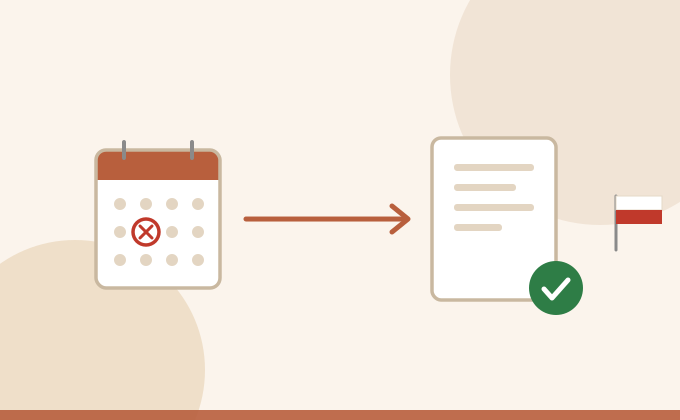
If the voivode refused your residence card, you have 7 calendar days from receiving the decision to file an appeal (odwołanie) addressed to the Head of the Office for Foreigners (Szef Urzędu do Spraw Cudzoziemców). It's a short window and easy to miss if you're not actively watching your mail and e-Doręczenia. One key procedural detail: the appeal isn't filed directly with UDSC — it goes through the same voivodeship office that issued the refusal, which then forwards the case upward.
What your appeal should include:
- your personal details and case number;
- the date the decision was issued and the date you received it;
- grounds for why the decision should be overturned — referencing specific errors in how your situation was assessed, or new documents that weren't taken into account.
Filing an appeal is free, and it automatically suspends enforcement of the refusal — meaning your stay in Poland remains legal while the appeal is under review.
The 7-day deadline cannot be extended. Miss it, and the decision becomes final (ostateczna) — from there, your options are preparing to leave or consulting a lawyer about whether grounds exist for a separate procedure (for example, if there were procedural violations).
Step 2. Review by the Head of UDSC
Formally, the Code of Administrative Procedure (KPA) allows one month for review, or two months for complex cases. In practice, the real timeline is more often 3 to 6 months — worth factoring in, especially if you also need to extend other documents or plan travel.
The Head of UDSC can: overturn the refusal and order the voivodeship to reconsider the case, change the decision directly, or uphold the refusal.
Step 3. If the appeal doesn't work — a complaint to the Regional Administrative Court (WSA)
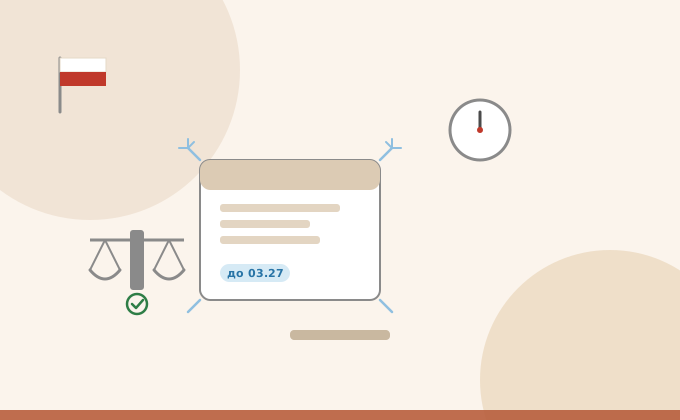
If the Head of UDSC upholds the refusal, the next step is a complaint (skarga) to the Wojewódzki Sąd Administracyjny w Warszawie. Since the Head of UDSC is based in Warsaw, complaints against its decisions are heard by the Warsaw WSA specifically — regardless of which voivodeship you actually live in.
Key parameters:
- filing deadline — 30 days from receiving the Head of UDSC's decision;
- the complaint isn't filed directly with the court — it goes through UDSC, which is obligated to forward it to the court along with the case file and its own response within 30 days;
- the court fee (wpis) for cases involving foreigners, passports, and visas is 300 PLN.
The court doesn't re-examine the facts from scratch — it checks whether the decision was lawful and properly reasoned, i.e. whether procedure was followed and the law correctly applied.
Step 4. Cassation to the Supreme Administrative Court (NSA)
If the WSA also rules against you, the remaining option is a cassation complaint to the Naczelny Sąd Administracyjny — the highest instance in administrative proceedings. The filing deadline is 30 days from receiving the WSA's ruling. This is no longer a review of facts but a check on whether the courts correctly applied the law — at this stage, a lawyer with procedural litigation experience is essentially required.
An appeal is not the same as a complaint about inaction
It's important not to confuse two different tools. An appeal (odwołanie) challenges a refusal that has already been issued. If there's no decision at all and the statutory deadline for issuing one has been exceeded, that's a different situation — and for that, there's ponaglenie (a formal complaint about an office's inaction), which we covered in our article on scam warning signs: it's an official procedure, not "connections" or speeding things up through a contact.
What this means in practice
According to our own statistics, in 94% of cases the reason for a refusal can be fixed and the case reconsidered — either through an appeal or by refiling on a more suitable basis. What matters most is not missing the short 7-day deadline, and preparing an appeal with clear, specific grounds rather than a generic request to "reconsider." If you haven't yet figured out why you were refused in the first place, start with our article on the most common refusal reasons by permit type.
Get your refusal reviewed for free
Received a refusal and not sure whether to appeal or reapply from scratch? Describe your situation — during a free consultation, we'll go through the reason for the refusal and your real chances along each possible path.
Frequently asked questions
Can the 7-day appeal deadline be extended? No, this deadline cannot be restored under any circumstances. It was deliberately kept short as part of the reform aimed at speeding up procedures — so it's worth preparing your appeal right after receiving the refusal rather than waiting until the last day. Miss it, and the decision becomes final.
How much does it cost to file an appeal with the Head of UDSC? Nothing — this stage is free. The court fee (300 PLN) only applies at the WSA complaint stage, if the case goes to court.
Can I stay in Poland while my appeal is under review? Yes — filing an appeal on time automatically suspends enforcement of the refusal, and your stay remains legal for the entire review period.
Comments