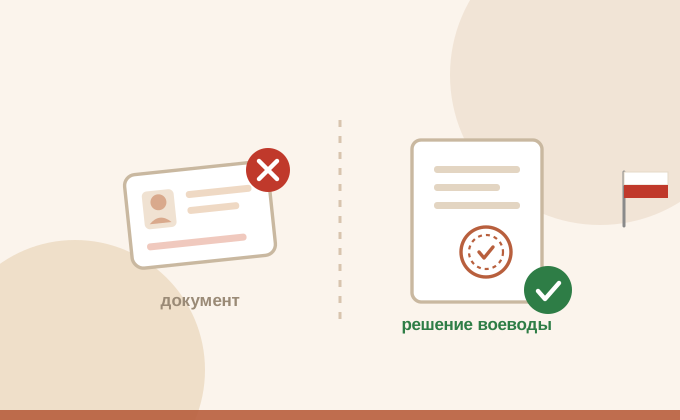
"Lost the card? You're illegal now, start over." That is the first thing you read in the chats, and it is wrong.
Separate two things and the rest becomes simple.
| What it is | How you get it | What a loss does to it |
|---|---|---|
| The permit (temporary, permanent, EU long-term) | A decision of the voivode | Nothing. The decision stands |
| The residence card | Issued as the document evidencing that decision (art. 242) |
The card is invalidated (art. 250); a new one is issued |
Art. 250 lists the grounds for invalidation, and loss is among them — but what is invalidated is the card, not the permit. The procedure ahead of you is called replacement of a document (art. 241), not a fresh application for a permit. That is not semantics: it governs the deadlines, the fee, and the fact that nobody is sending you off to assemble a full application file again.
So what follows is not about rescuing your status. It is about three deadlines, three amounts, and one trap almost nobody writes about.
Three deadlines to keep in mind
| Deadline | What to do | Provision |
|---|---|---|
| 3 days | Notify the authority that issued the card of the loss or damage | art. 232(1) |
| 14 days | File the application to replace the card | art. 230(1) |
| up to 2 months | Validity of the certificate issued in the meantime | art. 232(2)–(3) |
The three days run from the day of the loss, not from the day you noticed. In practice: the moment you find the card missing, notify — do not spend days hoping it turns up.
The fourteen days under art. 230(1) are the general deadline for applying to replace any document, "w terminie 14 dni po wystąpieniu przesłanek do ich wymiany" — within 14 days of the grounds for replacement arising. For a loss, the ground arises when the card is lost.
On the police. The statute does not require a police report:
art. 232speaks of notifying the issuing authority. But if the card was stolen, a police report is worth having — voivodeship offices ask for it in the file, and it settles the question of fault, which decides the size of the fee.
What it costs
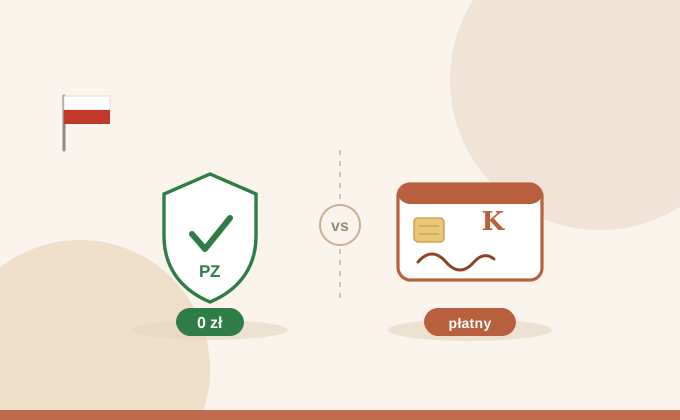
The base fee for issuing or replacing a card is PLN 100. What follows is why the figures online disagree.
Art. 238 allows the fee to be raised to 300% where the loss or destruction was the holder's fault. The ministerial regulation fills that in:
| Situation | Fee |
|---|---|
| Replacement on ordinary grounds (change of data, expiry) | PLN 100 |
| First loss or destruction through your own fault | PLN 200 |
| Each subsequent culpable loss | PLN 300 |
There is movement in the other direction too:
- A 50% reduction (
art. 237) for foreign nationals in financial hardship, school and university students, and minors under 16, on production of supporting documents. - Exemption (
art. 236) where the document issued carried technical defects, and for replacements on the grounds inart. 241(5)and(6)(changes relating to international protection).
The operative word in art. 238 is fault. A card stolen, with a police report to show it, and a card left in a taxi are different situations as far as the fee is concerned. The authority makes that assessment — which is exactly why the circumstances should be set out precisely in the notification, not summarised as "lost".
The certificate: what it does and does not do
Once notified, the voivode issues a certificate (art. 232(2)) confirming that the loss was reported. It is free and valid "do czasu wymiany dokumentu, nie dłużej jednak niż przez 2 miesiące" — until the document is replaced, but no longer than two months ((3)).
What it does: confirms you reported the loss, and serves as a temporary document inside the country.
What it does not do: it does not entitle you to cross the border. A residence card together with a passport lets you enter Poland without a visa; the certificate does not replace that function. Leave the country before the new card is ready and you will need a separate basis to come back.
This is not a technicality. A family visit or a work trip in the coming weeks is a reason either to stay until the new card arrives, or to sort out a visa in advance.
If the card turns up — and here it gets interesting
A week later the card surfaces in another coat pocket. It feels like a reprieve.
It is not. Art. 233 imposes two duties:
- Notify the authority that the lost document has been recovered — within 3 days;
- If a new card has already been issued, return the recovered one immediately to the authority that issued it.
Why this is not bureaucracy for its own sake becomes clear from two further provisions.
Art. 284: information about a document that was not returned is entered into the Schengen Information System (SIS) so that it can be seized. The card goes from "lost" to "sought" — in a database every border service in the zone can see.
Art. 283: where a person uses a document they were obliged to return, the inspecting authority seizes it and issues a certificate of seizure.
Put it together. You reported the loss, received a new card, found the old one and kept it in a drawer "just in case". Six months later, at passport control, you hand over the wrong card — the one flagged in SIS. It is taken, and the questions start coming your way.
Hence a simple rule: found after the new card was issued — hand it in. Found before — notify within the same three days, and the replacement procedure can usually be discontinued.
One more provision works in your favour if someone else finds it: art. 234 obliges anyone who finds another person's document to hand it over without delay to the voivode, the police, another administrative authority, or a Polish consul. Your card may well find its way back into the system without you — but do not count on it, because the art. 232 deadlines run regardless.
The gap nobody warns you about
Put two numbers from different provisions side by side.
The certificate is valid for two months at most (art. 232(3)). A new card takes — by the practice of voivodeship offices — around 30 days from the moment the file is complete. That sounds like room to spare.
But those thirty days run from a complete file, not from the notification: the application, photographs, a copy of the passport, proof of payment, and fingerprints given in person (art. 246 requires them on replacement). Any delay at that stage — an awkward appointment date, a missing document, an unpaid fee — eats into the margin. In busy voivodeships production runs past thirty days.
The practical conclusion: the certificate is not a buffer, it is a timer. File the replacement application in the first days of the fourteen you are given, and book the fingerprint appointment straight away.
Step by step
- On the day you notice — notify the issuing authority of the loss or damage (
art. 232(1), on the prescribed form). If it was theft, file a police report first or in parallel. - At the same time — ask for the certificate (
art. 232(2)). It is free. - In the first days, not on the fourteenth — file the replacement application with the voivode for your place of stay (
art. 230(1),art. 245): the application, two photographs, a copy of a valid travel document with the original for inspection, proof of payment, and the police report if stolen. - Appear in person for fingerprints (
art. 246). Without them the proceedings will not start. - Do not leave Poland before the new card arrives unless you have a separate basis for re-entry.
- If the card turns up — notify within 3 days, and if the new card has already been issued, return the recovered one immediately (
art. 233).
Two details usually decide the case: how the circumstances of the loss are described (that is what makes the fee PLN 100 or PLN 200), and how quickly the file is submitted — the certificate lasts only two months. In a free consultation we will review your situation and prepare the file.
Frequently asked questions
I lost my card — am I illegal now?
No. The permit comes from the voivode's decision, and losing the document does not cancel it. What is invalidated is the card (art. 250), not the permit. The procedure is called replacement of a document (art. 241), not a new application.
Do I have to go to the police?
The statute does not require it: art. 232 speaks of notifying the issuing authority. But where the card was stolen, a police report belongs in the file voivodeship offices ask for, and it helps on the question of fault, which decides the fee.
What does a replacement cost?
The base fee is PLN 100. Where the loss or destruction was your fault, art. 238 allows it to be raised to 300%: in practice PLN 200 for the first instance and PLN 300 for each one after. A 50% reduction under art. 237 applies to students, minors under 16 and those in financial hardship.
Can I leave Poland on the certificate? No. The certificate confirms that you reported the loss and works inside the country. Visa-free entry comes from the residence card together with your passport, and the certificate does not replace it.
How long is the certificate valid?
Until the document is replaced, but no longer than two months (art. 232(3)). A new card takes about 30 days from a complete file, so the application should not wait.
The card turned up after I received the new one. Can I keep it?
No. Art. 233 requires the recovered document to be returned to the issuing authority without delay. Data on an unreturned document is entered into SIS for seizure (art. 284), and presenting such a document leads to its seizure (art. 283).
My card is damaged but still readable. Do I have to replace it?
Damage is a ground for replacement in its own right, alongside loss (art. 241). The same deadlines apply: 3 days to notify, 14 days to apply.
I found someone else's residence card. What do I do?
Hand it over without delay to the voivode, the police, another administrative authority, or a Polish consul (art. 234).

Comments