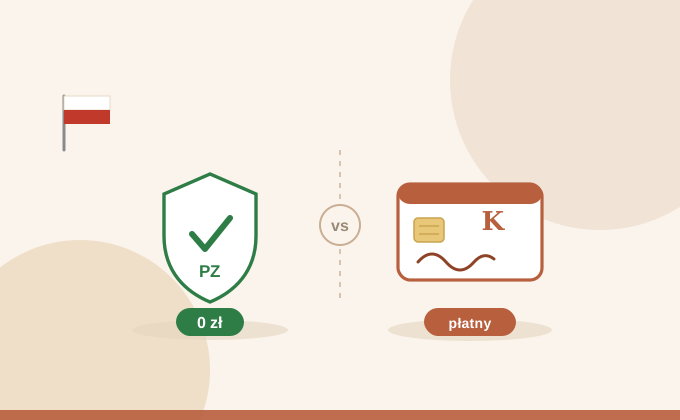
A Trusted Profile (Profil Zaufany) and a qualified electronic signature (podpis kwalifikowany) are two different electronic-signature tools in Poland, and confusing them is costly. A Trusted Profile is free, valid for 3 years, and covers almost everything a foreigner does with the state — including filing residence-permit and settlement applications through the MOS system. A qualified signature is paid, but under EU law it equals a handwritten signature and works where a Trusted Profile cannot: private contracts, court, and transactions across the EU. Here is what each is, how they differ, and how to obtain each.
Do you need to buy an electronic signature to file documents?
In most cases, no. For dealings with state authorities, a foreigner in Poland only needs a free Trusted Profile: submissions to offices, ZUS, the tax authority, and residence-permit and settlement applications through MOS are all signed with a trusted signature (podpis zaufany) at no cost.
We put this caveat first on purpose: there is a lot of confusion here, and foreigners are often sold a paid qualified signature where a free profile would have done. A paid signature is needed — but for a different set of tasks, covered below. Work out what you actually need first, then pay, not the other way around.
What is a Trusted Profile and what is it for?
A Trusted Profile is a free state means of electronic identification and signature. With it you log in to state portals (login.gov.pl, pz.gov.pl, mos.cudzoziemcy.gov.pl) and sign submissions with a trusted signature. Its legal meaning: a trusted signature replaces a handwritten one in dealings with public administration — offices, ministries, ZUS, the tax authority. The basis is the Act of 17 February 2005 on the computerisation of the activities of entities performing public tasks, which defines the profile, the trusted signature and their effect in matters with public bodies.
| Parameter | Value |
|---|---|
| Cost | Free |
| Issued by | The state (login.gov.pl / pz.gov.pl) |
| What you need | A PESEL number and legal capacity |
| Validity | 3 years, renewable for another 3 |
| Where it works | Public administration in Poland only |
An important limit: a Trusted Profile is not a universal signature. Outside dealings with the state (a private contract, court, a transaction with a counterparty in another EU country) a trusted signature does not carry the force of a handwritten signature and is often not accepted at all. It is enough for the state; not for private-law transactions.
What is a qualified electronic signature (podpis kwalifikowany)?
A qualified electronic signature is a paid signature that under EU law legally equals a handwritten one. This is stated directly in the European eIDAS Regulation:
"Kwalifikowany podpis elektroniczny ma skutek prawny równoważny podpisowi własnoręcznemu" (Article 25(2) of Regulation (EU) No 910/2014 of the European Parliament and of the Council, eIDAS).
It therefore works where a trusted signature does not: private contracts, tenders, court and commercial documents, and cross-border transactions — a qualified signature is recognised in every EU country, not only Poland.
| Parameter | Value |
|---|---|
| Cost | Paid (depends on the provider and certificate term) |
| Issued by | Commercial qualified trust service providers (Certum/Asseco, KIR Szafir, EuroCert, mSzafir, etc.) |
| What you need | Identity verification with the provider |
| Validity | Certificate usually 1–3 years |
| Where it works | Public and private matters, across the whole EU |
Price guide: a one-year certificate runs from around a hundred złoty upwards depending on the provider, the term, and whether you need a physical device (a card with a reader) or a cloud version. The provider sets the exact price — it is a commercial service, not a state fee.
How do they differ — briefly, in a table
| Feature | Trusted Profile (podpis zaufany) | Qualified signature (podpis kwalifikowany) |
|---|---|---|
| Price | Free | Paid |
| Legal force | Replaces a signature in dealings with state bodies | Equals a handwritten one (eIDAS, Art. 25(2)) |
| Where it works | Public administration in Poland only | Any documents, private contracts, all of the EU |
| Issued by | The state | A commercial qualified provider |
| Validity | 3 years (+3) | Usually 1–3 years |
| What you need | PESEL | Identity verification with a provider |
The easiest way to remember it: a Trusted Profile is for the state; a qualified signature is for everything else (and the state too). A qualified signature also covers government matters, so if you already have one, you may not need a separate Trusted Profile. The reverse is not true: a free profile will not sign a private contract.
How does a foreigner get a Trusted Profile?
For a Trusted Profile, a foreigner needs a PESEL number — without it you cannot set the profile up the standard way. What PESEL and meldunek are, and how these basics connect, is covered in our separate newcomer's glossary. With a PESEL, the profile is set up in one of these ways:
| Method | What you need |
|---|---|
| Via a Polish online bank | An account at a Polish bank that supports the Trusted Profile — confirmed online, no visit |
| A video call with an official | An online meeting with a clerk — for those without Polish online banking |
| In person at a confirmation point | An office (urząd gminy), ZUS, NFZ, a post office in Poland, or a consulate abroad — with a passport/ID |
| Via a qualified signature | If you already hold a qualified signature |
The practical snag for a foreigner is not the profile itself but the way to confirm identity. Many newcomers do not yet have Polish online banking, so the realistic options are a video call with an official or an in-person visit to a confirmation point (including a consulate if you are abroad). Plan for it: if you need the Trusted Profile for a specific filing (through MOS, say), allow time for identity confirmation rather than expecting to arrange everything on the last day.
How do you get a qualified signature?
A qualified signature is obtained from a commercial qualified trust service provider — in Poland that includes Certum (Asseco), KIR (Szafir), EuroCert, mSzafir and others. The general steps:
- Choose a provider and plan (certificate term, and the medium — a physical card with a reader or a cloud signature).
- Pass identity verification — in person, at the provider's partner, or remotely (video verification), depending on the provider.
- Pay and receive the certificate; you can then sign documents with it.
Unlike a Trusted Profile, this does not require a PESEL as a precondition — identity is confirmed against a passport with the provider. But it is paid, and the certificate must be renewed when it expires.
What should a foreigner choose — and when is a free Trusted Profile not enough?
For the vast majority of a foreigner's tasks in Poland, a free Trusted Profile is enough: residence-permit and settlement filings through MOS, matters with ZUS and the tax office, submissions to offices. That is almost always where to start.
A qualified signature is genuinely needed when the task goes beyond dealings with the state:
- private contracts with counterparties that require a signature equal to a handwritten one;
- court and commercial documents where a trusted signature is not enough;
- cross-border transactions — when a document must be valid not only in Poland but in other EU countries;
- some business procedures outside public administration — running a sole proprietorship (JDG) or an LLC (Sp. z o.o.) may require signing documents that an office will not accept with a trusted signature.
A note on the third option — a personal signature (podpis osobisty) from the electronic ID card (e-dowód): it exists in the Polish ID card, but that card is issued to Polish citizens, so for a foreigner this route is usually unavailable, and your real choice is between a Trusted Profile and a qualified signature.
If you are starting a business, it is worth assessing in advance which documents you will have to sign and where — this is a decision ("is a Trusted Profile enough, or do I need a qualified signature?") best made once and deliberately. How a sole proprietorship, an LLC and an umbrella company work — in separate articles.
Not sure whether you need a free Trusted Profile or a paid signature, or how to confirm your identity without a Polish bank? We will advise the best route for your situation and help you through identity confirmation.
Frequently asked questions
Do I have to have a PESEL to set up a Trusted Profile? Yes, the standard way to set up a Trusted Profile requires a PESEL number and legal capacity. A qualified signature does not require a PESEL as a precondition — identity is verified against a passport with a commercial provider.
Is a Trusted Profile enough to file residence-card documents through MOS? Yes. Filing residence, settlement and EU long-term resident applications through MOS is a matter with public administration, and a Trusted Profile is enough for the signature. A paid qualified signature is not required here (though it also works if you already have one).
Can I sign a private contract with a trusted signature from a Trusted Profile? Usually not. A trusted signature replaces a handwritten one only in dealings with public administration. For a private contract that must carry the force of a handwritten signature, you need a qualified signature (Art. 25(2) eIDAS).
How long is a Trusted Profile valid, and what do I do when it expires? A Trusted Profile is valid for 3 years and can then be renewed for another 3. Renewal is done online before it expires — better not to leave it to the last day, especially if you need the profile for a specific filing.

Comments